
Estonia and the Second World War
As other countries devastated by the Second World War, the conflict was a great tragedy for Estonia; moreover, it led to the loss of independence for half a century. During the Second World War, Estonia tragically became a battleground for two major powers – Germany and the Soviet Union. Occupations changed several times. For Estonia, the war only ended with the restoration of independence in 1991 and the withdrawal of Russian troops in 1994.
One of the gravest warnings and painful lessons of the Second World War was that states must not act to serve their specific interests alone. Only after an enormous tragedy came the realisation that states do not only have their own interests, instead, there are more universal interests in the world, and only a world built on peace and cooperation has a future. This lesson must not be forgotten.
We will always remember those who lost their lives on Estonian soil – the victims of both the German and Soviet authoritarian regimes.
The Soviet occupation of 1940-1941

At the start of the Second World War, the government of Estonia immediately declared neutrality but Estonia was nevertheless caught up in the conflict.
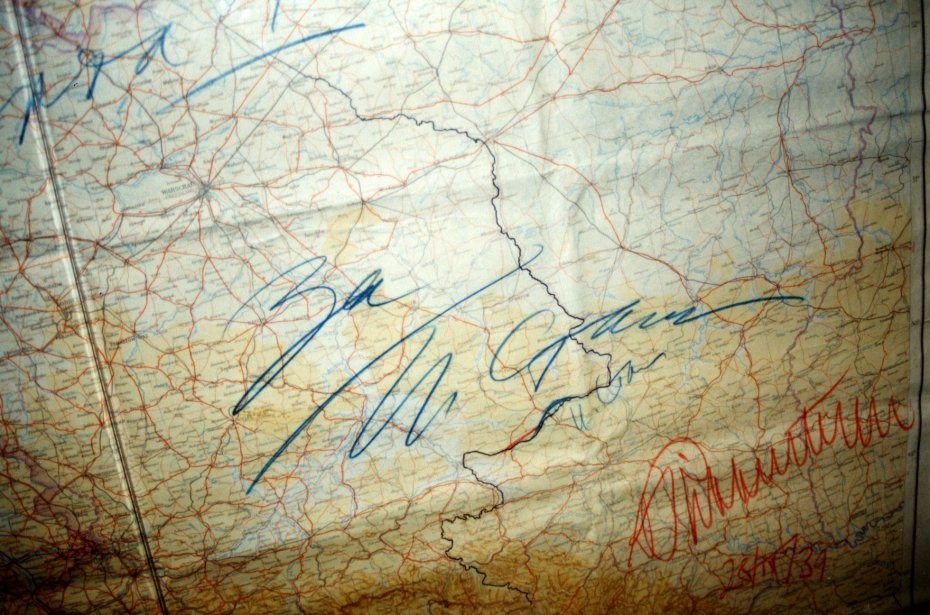
On 23 August 1939, the communist Soviet Union and Nazi Germany signed a non-aggression treaty known as the Molotov-Ribbentrop Pact, and its secret protocol, which divided the territories of independent European countries into the spheres of influence of two totalitarian regimes, thus paving the way for the outbreak of the Second World War. As a result, the Soviet Union brought its troops to Estonia in October 1939 (the so-called Bases Treaty) and occupied Estonia in June 1940.
As early as June 1940, the Estonian Army was incorporated into the Red Army, and when hostilities began between the Soviet Union and Germany, it was moved to Russia. At the same time, nearly all officers of Estonia were murdered. A systematic destruction of the political and economic elite was also launched, and cultural ties with the West and our northern neighbours were severed.
The German occupation of 1941-1944
The battles of the Second World War reached Estonia in July 1941, when former allies – Germany and the Soviet Union – began fighting each other on Estonian territory. As a result of these battles that lasted from July until October 1941, the forces of Nazi Germany occupied Estonia and the German occupation began, lasting until October 1944.
On the orders of the occupying German authorities, thousands of individuals were murdered in Estonia, including people deported from elsewhere and prisoners of war. Several concentration camps were located in Estonia and Jews were among those killed at the camps. Estonia’s local Jewish community was almost completely destroyed. By early 1942, all 4400 Jews who had been living in Estonia had left the country or had been executed.
Attempting to restore the independent Republic of Estonia on 18 September 1944

Taking advantage of a situation when the German forces were retreating and the Soviet troops had not yet entered Estonia, Jüri Uluots – the Prime Minister and acting President of the Republic of Estonia – appointed Otto Tief’s government. It was a desperate attempt to use the vacuum between two occupations to restore Estonia’s independence. Otto Tief’s government is significant because it helped maintain the continuity of the Republic of Estonia.
The Soviet occupation of 1944-1991
Between July and November 1944, Estonian soil saw battles that ended with the retreat of German forces and the re-entry of Soviet troops, that is, the re-occupation of Estonia. The occupation continued after the Second World War and involved a genocide. In 1949, tens of thousands of Estonians were deported from their homes to Siberia. They were replaced with migrant workers from various regions of the Soviet Union. The forced conscription of Estonians into the armed forces of the occupying Soviet regime continued until the restoration of Estonia’s independence in 1991. Russian military units left Estonian territory in 1994.

During the Second World War, the occupying forces of the Soviet Union and Nazi Germany forcefully and in violation of international law of war conscripted more than 100 000 Estonian citizens, which is nearly 10% of the population. Estonian soldiers who lost their right to make decisions and choices were also victims, just as other Estonian citizens who suffered because of the war.
The casualties among Estonians in the Second World War were great for a small country. Over the course of the war, Estonia lost a fifth of its population as compared to its pre-war population. Several Estonia’s traditional ethnic minorities – Germans, Swedes and Jews – had left the country or were exterminated. Nearly 100 000 Estonian residents had fled to the West and never returned to Estonia. Additionally, around 20 000 Baltic Germans moved to Germany.
Between 1940 and 1945, at least 70 000-75 000 Estonians died as a result of the occupations and the Second World War, which amounts to 6-7% of Estonia’s pre-war population.
Estonia learnt a very painful lesson from the Second World War. When the war broke out, Estonia was alone, without allies and friends. Today, with our allies, by standing together and sharing the same values, such as democracy, human rights and the rule of law, we can prevent new atrocities and build a better world.


