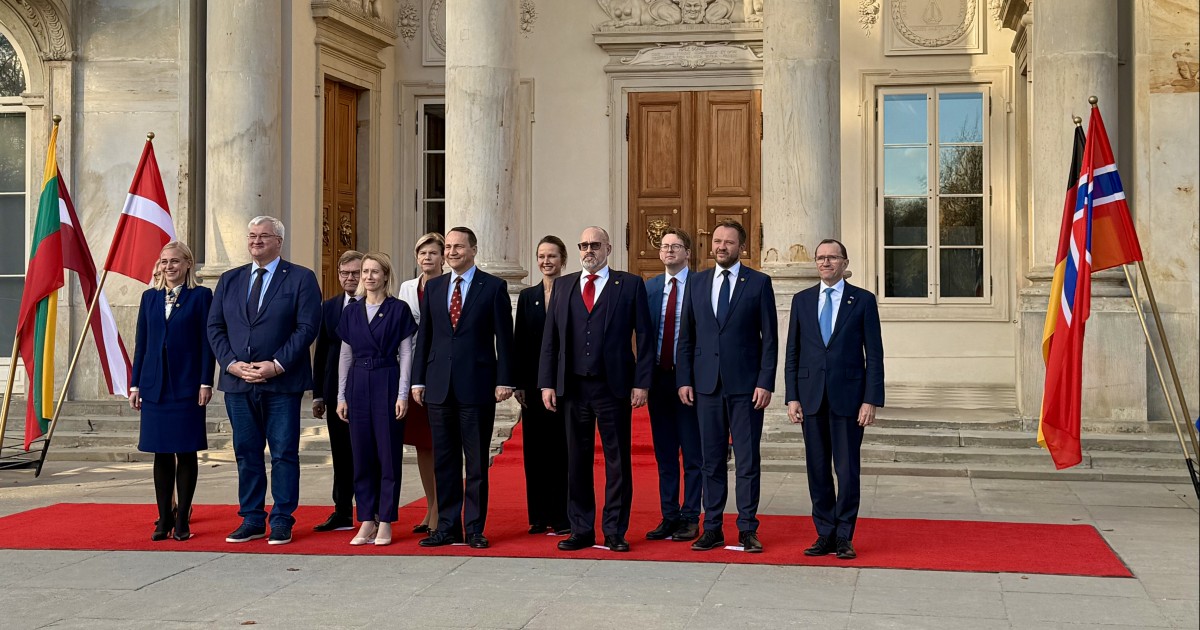
“Baltic Sea states have been among Ukraine’s most steadfast and strongest supporters, and today’s meeting confirmed that we remain united in our commitment to the course we have taken,” said Tsahkna.
“Recent weeks have once again shown that Russia does not want peace and has not abandoned any of the strategic goals for which it launched its full-scale aggression in 2022. A prerequisite for meaningful peace negotiations must be Russia’s agreement to a ceasefire, which Ukraine has proposed repeatedly. At the same time, we must continue to put pressure on Russia and support Ukraine to ensure that it is in the strongest possible position both on the battlefield and at the negotiating table,” the minister said.
According to Tsahkna, at today’s meeting the foreign ministers stressed that Russia must have no say in the security arrangements of European countries.
“The European Union and NATO are the cornerstones of Europe’s long-term security. Ukraine, like every other European country, must retain the sovereign right to choose its security arrangements and alliances,” Tsahkna said.
The foreign minister said that every possible means must be mobilised to help Ukraine get through the winter and prevent Russia from forcing it to surrender through relentless air strikes. Tsahkna also discussed this separately at a bilateral meeting with his Ukrainian counterpart, Andrii Sybiha.
“Together with the Ukrainian foreign minister, we briefed other countries on preparations for the Ukraine Recovery Conference, which will take place in Tallinn at the end of January. Our aim is to use the conference to bring together the most urgent and essential assistance for Ukraine, helping the country at what is likely to be one of the most difficult points of the winter,” Tsahkna said.
According to Tsahkna, increasing pressure on Russia remains a priority.
“Sanctions must be strengthened further, but we have other levers at our disposal too. These include using Russia’s frozen sovereign assets, deepening Russia’s political isolation and keeping Russian representatives away from international sporting and cultural events. Estonia stopped issuing tourist visas to Russian citizens years ago, and an increasing number of European countries now recognise the need for this step,” he said.
Putting further pressure on Russia is also in Europe’s own security interests. Visa restrictions would help reduce the risk that Russian citizens who may be involved in organising acts of sabotage or provocations in Europe could move freely around the continent.