
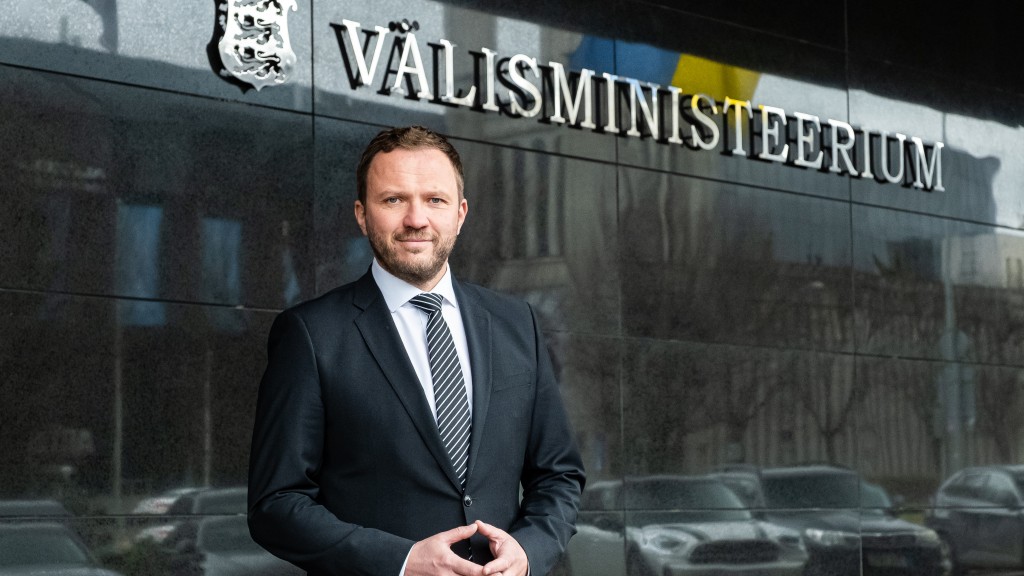
“Europe must be able to stand up for its interests, preserve and increase its prosperity, and ensure its security. Achieving these objectives requires greater competitiveness, reduced dangerous dependencies, increased investment in defence and closer cooperation with like-minded partners. All of these issues were also addressed in today’s State of the Union address,” Tsahkna said.
“Security and defence were identified in the address as priority areas for the European Union, which is entirely appropriate given the current security environment and the threat posed by Russia. These areas require both sustained political attention and funding from the EU, also on the Eastern Flank,” Tsahkna said. “The Commission President put forward several new ideas on security, which can be assessed in greater detail once they are presented to the member states in a more concrete form.”
According to the Foreign Minister, NATO remains the cornerstone of European security, and all EU activities in the field of security and defence must be aligned with NATO’s objectives.
The Foreign Minister welcomed the idea expressed in the address that ensuring European security requires looking beyond the European Union and developing ever closer cooperation with other NATO Allies and like-minded countries.
“Von der Leyen’s proposal to discuss creating a form of associate membership of the European Union for Canada is a highly ambitious idea, demonstrating that Europe understands the need to strengthen its relations with partners in different ways in the interests of its security and economic success,” Tsahkna said.
According to Tsahkna, it was also welcome that von der Leyen highlighted Europe’s strengths.
“Europe often lacks confidence, even though we actually have much to be proud of and much that we can use to make our continent an even stronger actor on the world stage. We have a large single market, world-class industry, substantial savings and a powerful currency. We must recognise these strengths and make full use of them,” Tsahkna said.
According to the Foreign Minister, Europe’s geopolitical strength is inextricably linked to how Russia’s war of aggression against Ukraine ends.
“The Commission President rightly noted in her address that Ukraine is currently fighting for both its own freedom and ours,” Tsahkna said. “Nevertheless, I would have expected concrete proposals on how to ensure that Ukraine has, above all, the financial resources it needs to get through a difficult winter.”
“During my recent visit to Ukraine, the need for financial support was the message I heard most clearly. I would therefore have expected the address to include a proposal to use Russia’s frozen assets to cover Ukraine’s critical financing needs,” Tsahkna said.
According to the Foreign Minister, there should also have been a stronger message about what kind of Europe we want to see once Russia’s aggression has ended and how Europe’s long-term security will then be ensured.
“Europe must work towards achieving a just and lasting peace while at the same time developing the post-war order. I am convinced that ensuring Europe’s long-term security requires us to move decisively forward with European Union enlargement so that there are no grey areas between the EU and Russia,” Tsahkna said. He added that the Commission President’s messages on enlargement could have been even stronger.
“While the positive and fundamental impact of EU membership on acceding countries is often discussed, we should more frequently remind ourselves that EU enlargement also benefits the current member states. It creates a larger single market, thereby improving the economic prospects of member states, and makes the EU an even stronger global actor.”
According to Tsahkna, the Commission President was also right to emphasise that Europe must reduce dangerous dependencies.
“We have done this with Russian fossil fuels, and we must move forward just as decisively when it comes to critical raw materials, energy, technology and other strategic supply chains. This is both an economic and a security issue,” Tsahkna said. He added that the proposal put forward in the address to establish a European critical raw materials corporation, which would help Europe jointly procure critical raw materials and build up reserves, was worth considering.
“No European country can act alone when it comes to critical raw materials. We need cooperation to reduce dependencies, secure supplies of critical raw materials for our industries and increase Europe’s own processing capacity,” Tsahkna said, adding that Estonia has an important role to play in this area through the NEO plant in Narva.
“A strong Europe is built through investment in defence capabilities, continued support for Ukraine, a stronger defence industry, a competitive economy and a willingness to take responsibility for its own security,” Tsahkna said. “Estonia supports this ambition and expects us to move swiftly from words to action.”

