
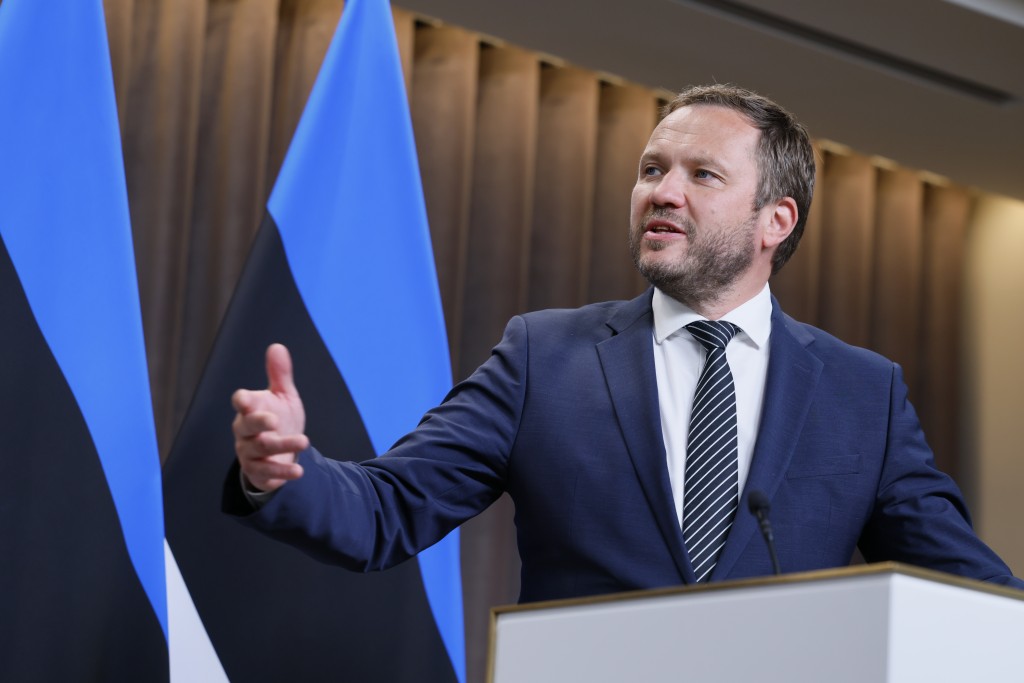
“There is nothing new in Putin’s demands today compared with those made at the end of 2021 and the beginning of 2022. Shortly before launching his full-scale war, Moscow presented a whole series of ultimatum-like demands aimed at reshaping Europe’s security architecture. These directly concerned Estonia and our entire region.
One could say that a lot of water has passed under the bridge since then, but it would be more fitting to say that a great deal of blood has been spilled. For nearly five years, Russia has been killing, destroying and plundering in Ukraine. Yet now it has returned to the negotiating table with exactly the same strategic objectives as those with which it launched its full-scale invasion.
Following the talks in Abu Dhabi, Vladimir Medinsky, head of the Russian delegation, explicitly referred to the ultimatum presented to NATO, the United States and European countries in 2021. Putin’s foreign policy adviser, Yuri Ushakov, went even further, saying that Russia wanted to add new demands to those made at the time, drawing on the experience gained during the war.
Once again, we hear Russia making demands concerning countries’ membership of NATO, restrictions on the deployment of Allied forces, and Ukraine’s right to choose its security arrangements and allies.
It is clear that Russia is not taking part in the current process with the intention of ending its war against Ukraine. Instead, it wants to use negotiations as a means of exerting pressure and achieving what it has been unable to achieve on the battlefield. Russia wants to force sovereign countries to abandon their security choices and restore spheres of influence in Europe in which Moscow would have the right to decide the fate of other countries.
If such demands become the starting point for negotiations after years of aggression, or are met even in part, this would send an extremely dangerous message: if you cannot get your way before a war, you can achieve your aims after years of killing, looting and destruction.
It would also signal to other aggressive powers around the world that the use of force pays off.
History has repeatedly shown that making concessions to aggressors does not guarantee peace; instead, it whets their appetite and encourages further aggression. That is why Russia must be shown convincingly that aggression and the use of force will not help it achieve its objectives.
Europe’s current security architecture was created to protect our countries and deter Russia. We cannot allow the very source of the threat to dictate the rules designed to contain it. Decisions on European security must be made by European countries themselves.
Europe must stay the course and remain focused on increasing pressure on Russia and supporting Ukraine. We must step up sanctions pressure, limit Russia’s ability to finance and continue its war, put Russia’s frozen assets to use and restrict the issuing of visas to Russian citizens. It is through sustained pressure on Russia and strengthening Ukraine that we can force Russia to abandon its aggressive objectives towards both Ukraine and Europe as a whole.”

