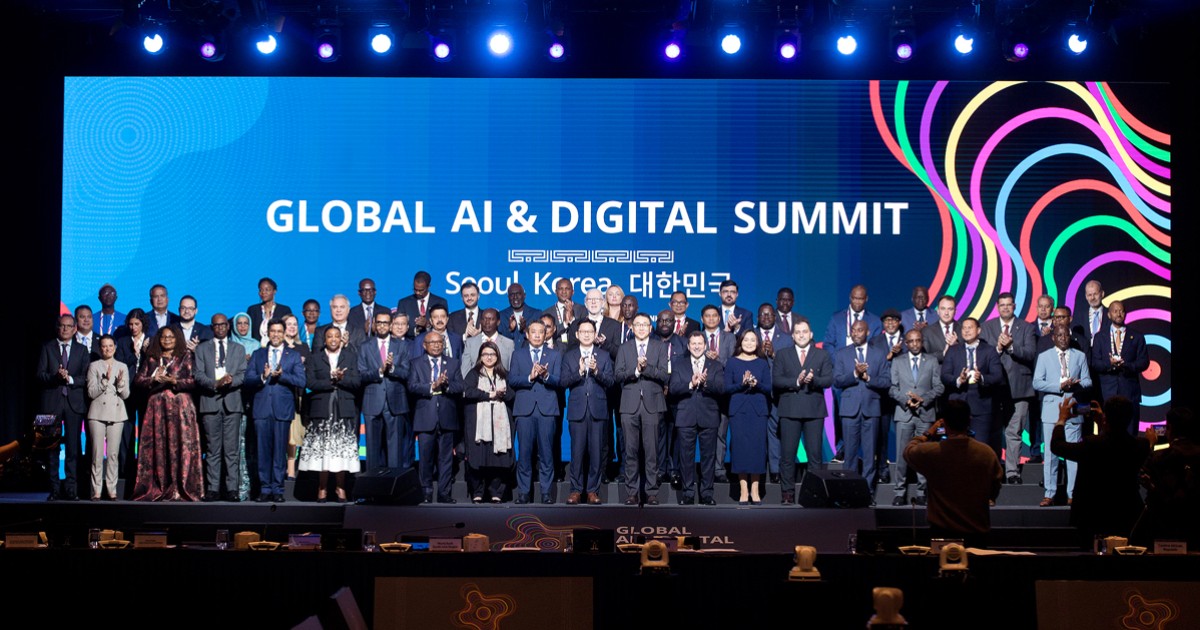
At the summit, Undersecretary Lind spoke about Estonia’s experience in developing a digital state and how to make digital services more accessible to people. “Our experience in developing secure digital identity, e-governance and digital solutions has shown that technology improves people’s everyday lives when it is built on trust and responds to the needs of the population. Today, we are implementing AI solutions across various sectors, including through the Eesti.ai and AI Leap initiatives, while ensuring that innovation goes hand in hand with democracy, human rights and the rule of law,” Lind said.
“Co-leading the UN Global Dialogue on AI Governance has confirmed to Estonia that the future of AI cannot be shaped by a small group of countries alone. We need closer international cooperation to ensure that countries around the world have more equal access to the infrastructure and digital capabilities needed to develop artificial intelligence,” Lind stressed.
According to the Undersecretary, alongside the opportunities offered by technology, we must also address the risks, including cyber threats, the concentration of power and the misuse of technology. “That is why we support international cooperation to develop a global framework for the use of artificial intelligence. Achieving this requires strong partnerships, knowledge-sharing and investment in digital infrastructure and skills, particularly in countries where digital ecosystems are still developing. Estonia’s candidacy for the position of Director of the ITU Telecommunication Development Bureau is also one way in which we are contributing to this development,” Lind said. She affirmed that Estonia was ready both to share its experience and to learn from other countries. “The age of AI, and the future it brings, must be open, trustworthy and inclusive.”
Another key objective of the visit was to present the candidacy of Nele Leosk, Estonia’s former Ambassador at Large for Digital Affairs, for the position of Director of the ITU Telecommunication Development Bureau to as many countries as possible. Bilateral meetings were held with ministers and high-level delegations from Ukraine, Vietnam, Bangladesh, Panama, Guatemala, Bhutan, Madagascar, Benin, Costa Rica, The Gambia, Cabo Verde, Timor-Leste, Egypt, Sri Lanka, Kosovo, the Philippines, Micronesia, Mongolia, South Sudan, Syria, Mauritius, Malawi and Côte d’Ivoire.
Nele Leosk currently heads the European Commission’s digital cooperation centre, Knowledge Hub Digital, and has contributed to the digital development of more than 110 countries over the course of her career. The election will take place at the ITU Plenipotentiary Conference in Doha from 9 to 13 November.