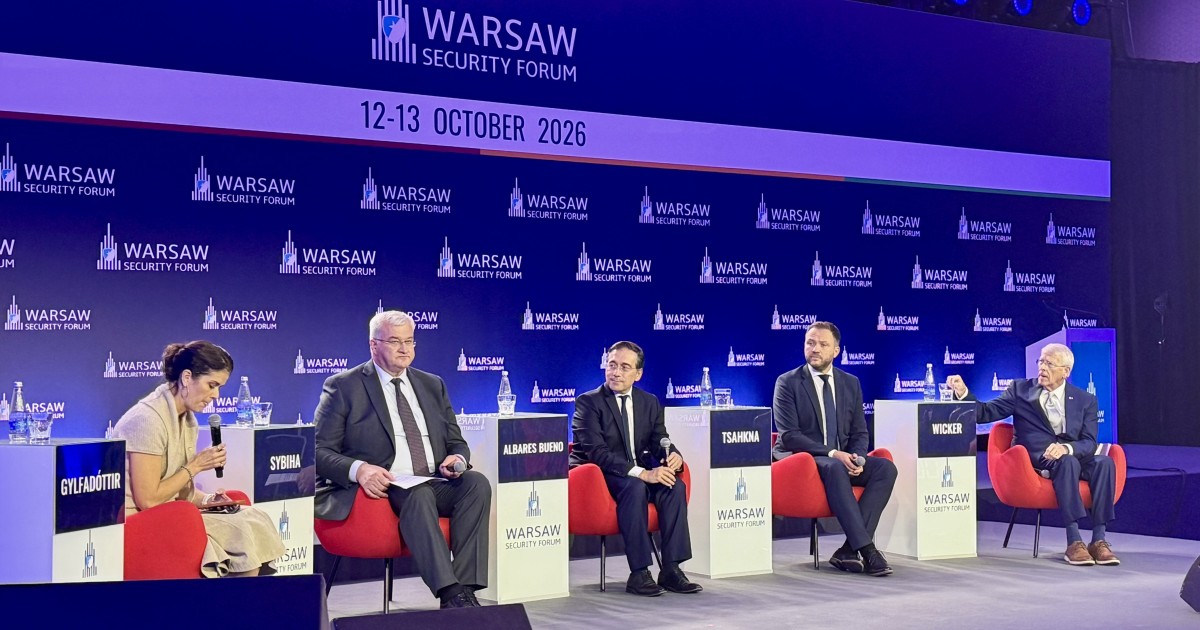
“Russia’s aggression is not a war film that simply ends because we have grown tired of it and want something different. The war will end only if we support Ukraine and put strong pressure on the aggressor. It is time for Europe to implement measures that have been postponed so far, whether that means using frozen assets or restricting the issuance of visas to Russian citizens,” Tsahkna said.
“Ukraine is fighting for our freedom and security too. Russian forces that were previously stationed near our borders have suffered heavy losses in Ukraine, and Ukrainian resistance is keeping Russia’s military forces tied down there,” Tsahkna said. “Russia is trying to use fear to influence both Estonia and the wider Western world, including by carrying out acts of sabotage within our societies. It is important that we remain united, attribute Russia’s acts of sabotage and cyberattacks, and hold those responsible to account,” Tsahkna stressed.
Speaking about Europe’s future security, the Foreign Minister highlighted the importance of Ukraine’s membership of NATO and the European Union. He said that work towards this goal must begin now, as securing Ukraine’s place in Europe’s security architecture will strengthen Europe as a whole.
“The Coalition of the Willing must also regain momentum, as it is extremely important to develop security guarantees for Ukraine that will ensure Russia’s aggression against Ukraine never happens again,” Tsahkna said. “At the same time, we must remember that Ukraine, with its wartime experience and combat-ready army, also has a role to play in ensuring Europe’s future security.”
The discussion also featured Ukrainian Foreign Minister Andrii Sybiha, Spanish Foreign Minister José Manuel Albares and US Senator Roger Wicker. It was moderated by former Icelandic Foreign Minister Thórdís Kolbrún Reykfjörd Gylfadóttir.
Watch the discussion on YouTube.
This year’s discussions at the Warsaw Security Forum were informed by a recently published report entitled Securing Europe from the Eastern Flank to the High North: Strategy for the Nordic-Baltic-Polish Group, to which Foreign Minister Margus Tsahkna also contributed. The full report is available HERE.
On the sidelines of the conference, the Foreign Minister held meetings with Kosovo’s Deputy Prime Minister and Foreign Minister Glauk Konjufca, International Atomic Energy Agency (IAEA) Director General Rafael Mariano Grossi, Bill Browder and Ukraine’s Minister for Veterans Affairs, Oleg Shymanskyi.
Photos of the Foreign Minister’s participation in the Warsaw Security Forum.