
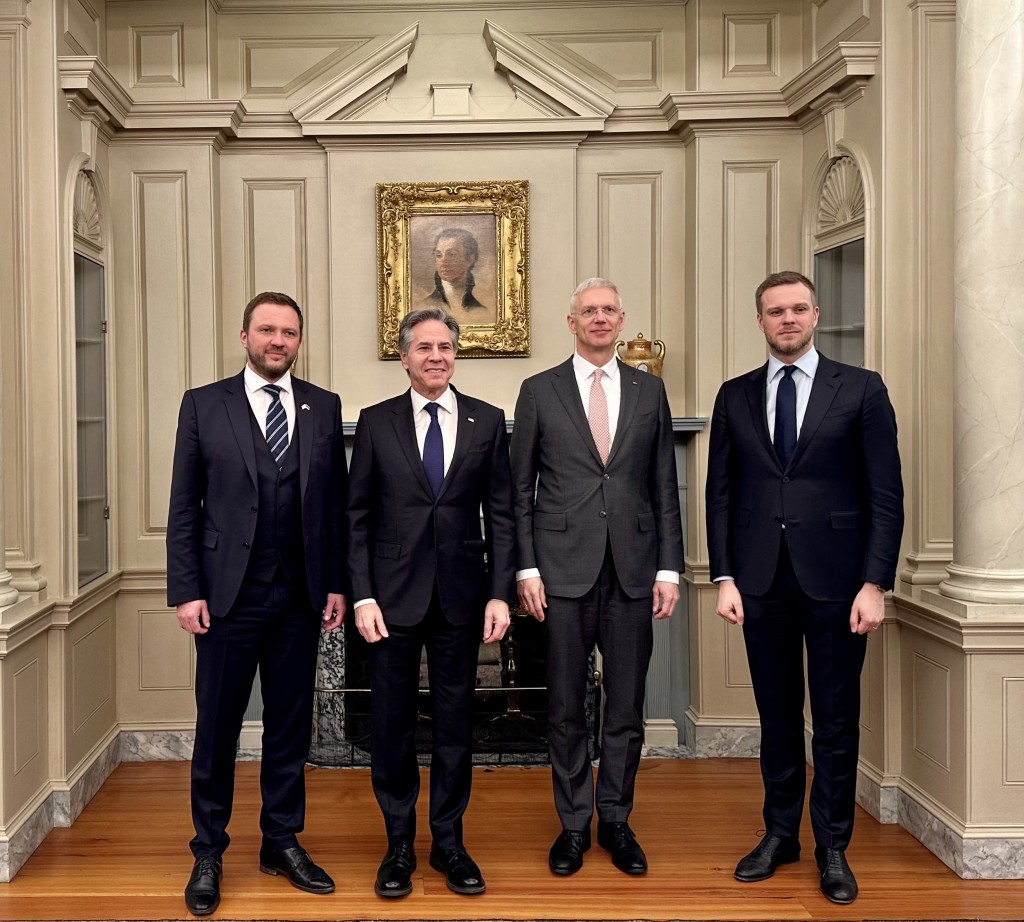
At the meeting, Tsahkna affirmed that Estonia highly valued the contribution of the US to our region’s security, its efforts to end the war in Gaza, and its leading role in helping Ukraine.
“US security assistance and presence in our region significantly contributes to peace and security in Europe. This, in turn, supports the strong economy across the Atlantic,” Tsahkna said, referring to the interconnected political and economic ties between the United States and Europe. “Therefore, Ukraine’s victory in Russia’s brutal war of aggression is the only way to ensure security and prosperity across the Euro-Atlantic region.”
“Ukraine’s victory can be the only goal of the free world. All our actions are informed by our wish to meet this goal as soon as possible,” Tsahkna said, emphasising that together we have enough resources to help Ukraine win. “Like-minded countries allocating 0.25% of their GDP over the coming years to Ukraine’s defence would be sufficient to ensure Ukraine’s victory. Estonia has already made this commitment.”
Tsahkna said that in addition to increasing military aid, ramping up sanctions against Russia and using frozen Russian assets to help Ukraine were also crucial.
Tsahkna’s visit to Washington is taking place during a symbolic week, when Estonia celebrates 20 years since joining NATO. “NATO’s open door policy has proven itself. The accession of seven Eastern Flank states two decades ago and the recent accession of Finland and Sweden has made NATO stronger than ever ahead of its 75th anniversary,” Tsahkna said, adding he hoped that NATO’s July summit in Washington includes steps towards Ukraine becoming a member. “There is no longer a place for grey areas in Europe, which is why we hope to see Ukraine under the protective umbrella of the Alliance as soon as circumstances allow.”
At the meeting with Blinken, Tsahkna also underlined that Russia remained the most significant and long-term threat to allied security, which is demonstrated by its hybrid operations in the West in addition to the aggression against Ukraine. “Estonia recently saw hybrid operations by Russia’s special services, attacking the property of the government and journalists with the aim of sowing fear in our societies and undermining our stability,” Tsahkna said. “I believe that Allies can cooperate even more efficiently in countering hybrid operations in the future.”

