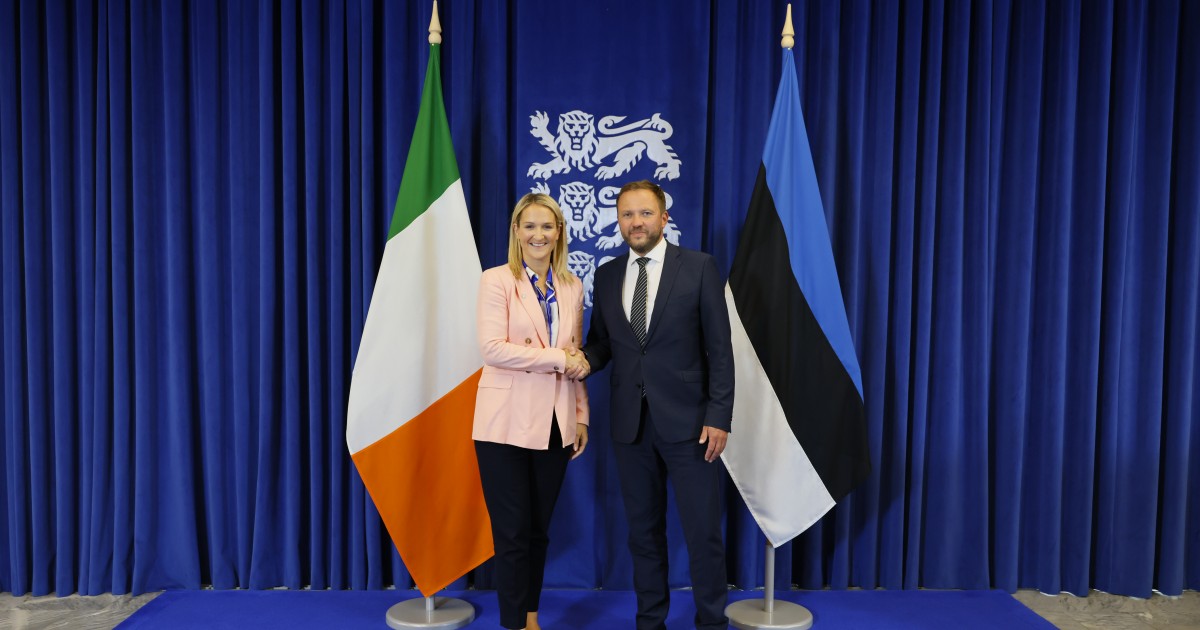
According to Tsahkna, Ireland, as holder of the EU Presidency, has an important role in advancing Europe’s common decisions. “We consider it important to take robust action in supporting Ukraine and exerting pressure on Russia, including through additional economic sanctions, as well as in ensuring Europe’s defence and security,” Tsahkna said. Estonia also supports reaching agreement on the EU’s next long-term budget during Ireland’s Presidency.
Speaking about Ukraine, Tsahkna stressed that Europe must provide Ukraine with greater support and help the country move forward on its path towards accession to the European Union. “Ukraine’s future lies in the European Union, and EU membership is the best long-term security guarantee for Ukraine,” he said. The declaration of intent signed by Tsahkna and McEntee builds on existing Estonian-Irish development cooperation in Ukraine. Ireland’s €1 million contribution to ESTDEV’s ‘Education and Healthcare for Ukraine’ project will help improve rehabilitation and specialist medical care and train the specialists Ukraine needs.
On increasing pressure on Russia, Tsahkna stressed the need to tighten sanctions and make progress on using frozen Russian assets for the benefit of Ukraine. “Russia must pay for the damage it has caused. Europe must respond more forcefully to the increasing attacks and subversive activities,” he said.
According to Tsahkna, the international isolation of Russia and Belarus must also continue, including in the fields of culture and sport, and access to the European Union for combatants who have fought in Russia’s war must be restricted. “Aggression and war crimes must bring consequences,” Tsahkna said. Estonia called on Ireland to take the next step and join the agreement establishing the Special Tribunal for the Crime of Aggression.
Speaking about European security, Tsahkna noted that Russia’s increasing attempts at sabotage and other subversive activities have not changed Estonia’s threat assessment. “Russia poses a long-term threat to European security, and strengthening Europe’s defence capabilities must remain our long-term priority,” he said.
According to Tsahkna, Estonia and Ireland are close partners with a similar understanding of the challenges facing Europe. “We have much in common, both in supporting Ukraine and in making Europe more secure,” he said.
The foreign ministers’ joint press conference is available to watch online.
Photos from the visit.