
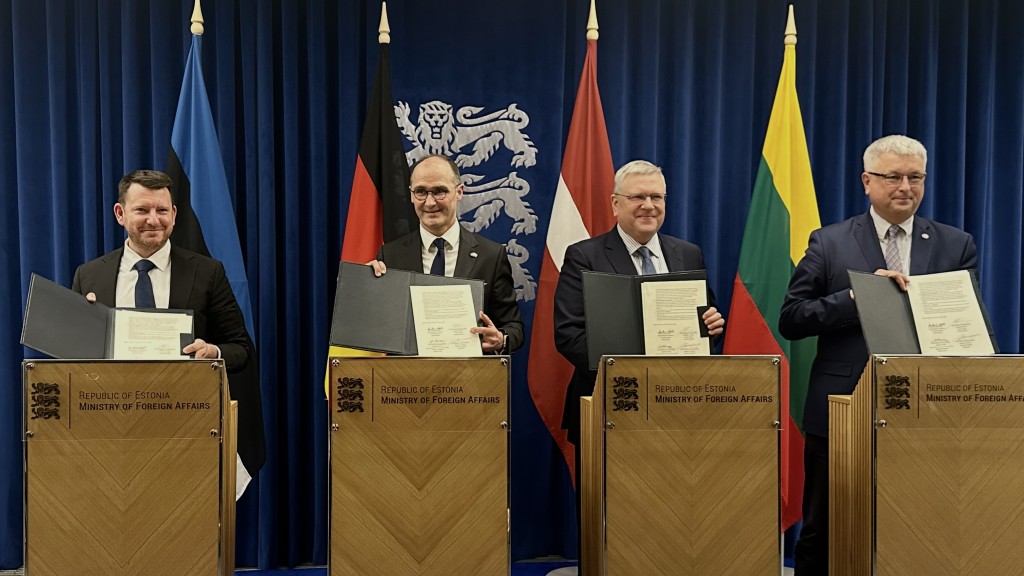
Secretary General Vseviov emphasised that in the context of growing foreign influence activities, disinformation and hostile propaganda, it is crucial to strengthen societal resilience. He noted that closer cooperation between like-minded countries is key to protecting and developing the democratic information space.
Through the agreement, the Baltic States and Germany reaffirmed their readiness to promote media literacy and critical thinking, support access to free and independent journalism, and strengthen regional cooperation in order to build a stronger and more resilient media environment. The memorandum aims to create closer links between citizens, state institutions, local authorities, experts, academics and media outlets in all four countries, in order to map key challenges and find solutions to problems in the information environment. Particular attention will also be paid to preserving historical memory in order to prevent the spread of false narratives.
Since 2015, the Baltic States and Germany have concluded bilateral agreements to promote strategic cooperation in the fields of communication and media. Germany has supported Estonia, Latvia and Lithuania with a total of one million euros per year to implement media literacy development projects. In Estonia, the support has been used to organise media and digital literacy training, journalism training programmes, support the annual media literacy conference, develop educational materials, and strengthen young people’s argumentation skills, critical thinking and self-expression.
Prior to the signing, Secretary General Vseviov also met separately with the State Secretary of the German Federal Foreign Office, Bernhard Kotsch. The discussions focused on continued support for Ukraine, additional measures to increase pressure on Russia, transatlantic relations, European security issues, and advancing bilateral relations.

