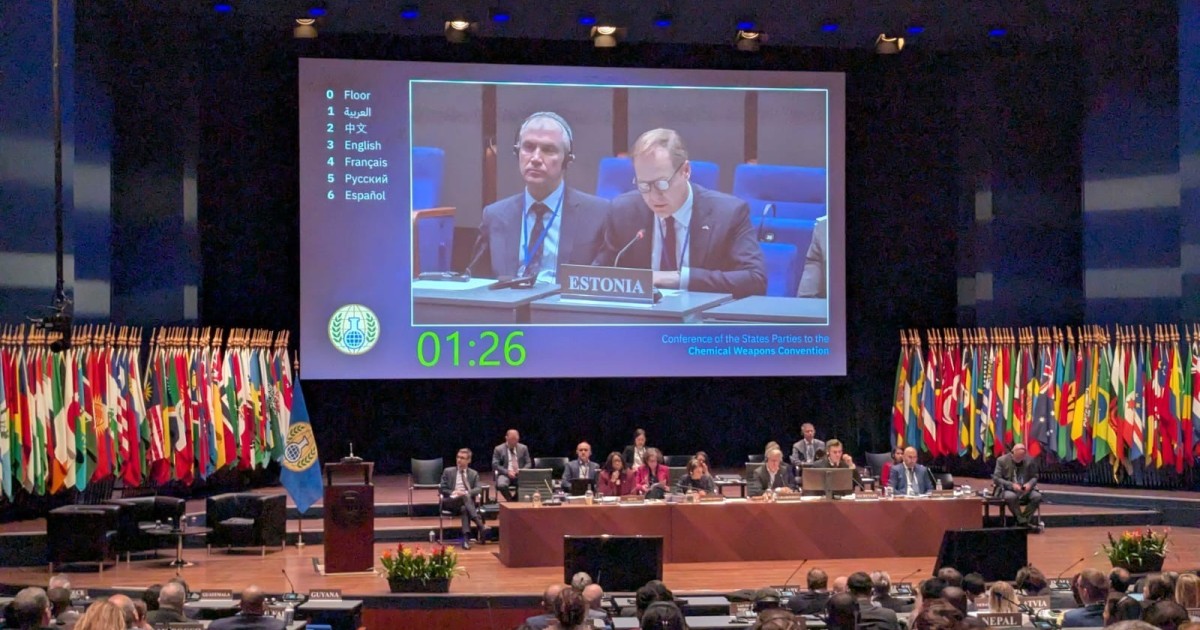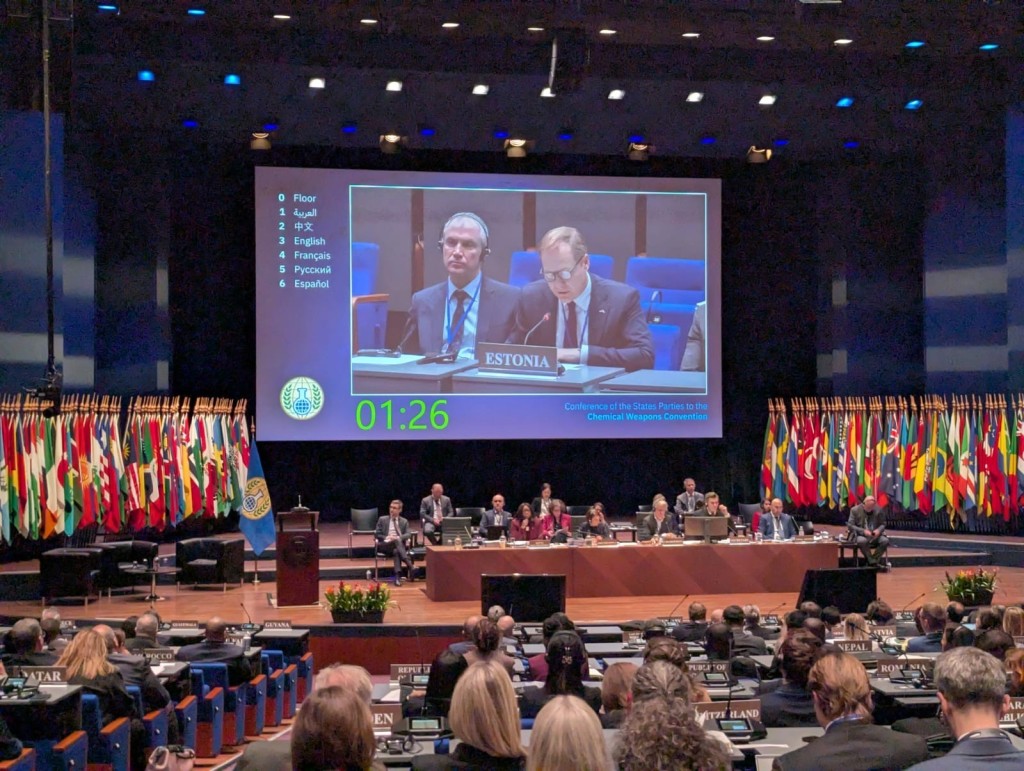
According to Foreign Minister Margus Tsahkna, Estonia’s election is an important recognition of the country’s consistent work to uphold international rules and its standing in the international community.
“This is an important diplomatic victory for Estonia. Our election to the OPCW Executive Council reflects the international community’s high regard for Estonia’s contribution to upholding the Chemical Weapons Convention and supporting the work of the OPCW. Russia, which cynically violates the Convention on the Prohibition of Chemical Weapons and systematically uses prohibited chemical agents in its war of aggression against Ukraine, was not elected. Through their votes, the OPCW States Parties sent a clear message about Russia’s use of chemical weapons: there is no place in the organisation’s governing body for a country that tramples on the very principles on which it is founded,” Tsahkna said.
“Russia has violated the Convention by using the nerve agent Novichok both to poison Sergei Skripal in Salisbury in 2018 and against Alexei Navalny in 2020. In addition, a Ukrainian state investigation has established that Russia has used chemical agents prohibited under the Convention more than 14,000 times along the frontline in its war of aggression and continues to use them against Ukrainian soldiers. It is unthinkable that a country which itself violates international rules should have a leading role in an organisation responsible for upholding them,” Tsahkna said.
Estonian Ambassador to the OPCW Paul Teesalu said that the election result confirmed Estonia’s strong reputation and credibility among the organisation’s member states.
“Estonia is a valued and trusted partner at the OPCW, whose positions and expertise are taken seriously. Election to the Executive Council gives us an opportunity to contribute even more actively to the implementation of the Chemical Weapons Convention and to making the organisation more effective. We also want to bring Estonia’s experience as a digital state to the Executive Council, including our expertise in the opportunities offered by artificial intelligence and the risks associated with it,” Teesalu said.
Estonia has been an active member of the OPCW since 1999 and previously served on the Executive Council from 2017 to 2019. During its new term, Estonia intends to focus on the full implementation of the Chemical Weapons Convention, effective attribution of cases involving the use of chemical weapons, strengthening the OPCW’s capabilities and developing practical cooperation between member states. Estonia also considers it important to make use of digital solutions and the opportunities offered by artificial intelligence, while taking into account the risks they entail.
The OPCW, which has 193 member states, was established in 1997 to implement the Chemical Weapons Convention. Its aim is to achieve the complete prohibition and destruction of chemical weapons and ensure that they are never used again. The OPCW is headquartered in The Hague. The organisation was awarded the Nobel Peace Prize in 2013.